
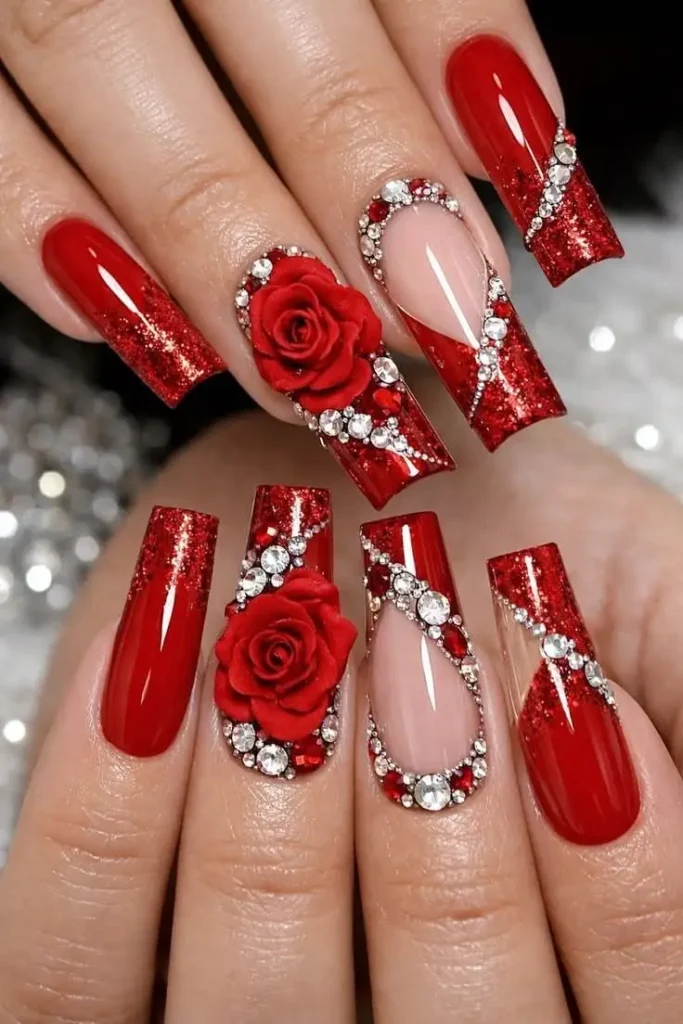
Gel nails vs acrylic nails is one of the most common questions at the nail desk, and the short answer is this: gel is cured under a lamp and gives a glossy, flexible finish, while acrylic is built from liquid and powder and gives a firmer, stronger one. Neither is better for everyone. The right choice depends on your nail length, your lifestyle and how you plan to look after your nails.
It gets confusing because “gel nails” can mean three different things: gel polish on your natural nails, soft-gel extensions, or hard-gel enhancements. Each behaves differently, especially at removal. This guide explains the seven differences that matter, which treatment suits which lifestyle, and what to ask before you book.
Table of Contents
What Is the Difference Between Gel Nails and Acrylic Nails?
Acrylic nails are made by mixing a liquid monomer with a powder polymer. The technician sculpts the mixture onto your nail or over a tip, and it hardens when it is exposed to air. It is then filed and shaped.
Gel nails use a gel-based product that is brushed on in thin layers. Each layer is hardened under a UV or LED lamp before the next goes on.
The trouble is that “gel” covers several products:
- Gel polish (a gel manicure): colour or clear gel on your natural nails. It adds shine and wear time but no extra length, and it soaks off in acetone.
- Soft gel, including soft-gel tips: a flexible gel used for overlays and extensions. It is designed to soak off.
- Hard gel (builder gel): a denser gel used for strength and sculpted extensions. It cannot be soaked off and must be filed off by a technician.
You may also hear about polygel, a putty-like hybrid of acrylic and gel that is usually filed off. When a salon says “gel”, ask which one it means, because the answer changes how long it lasts, how it feels and how it comes off.

Gel Nails vs Acrylic Nails: 7 Key Differences
Here is the quick comparison. The details follow below.
| Gel polish / soft gel | Hard gel | Acrylic | |
|---|---|---|---|
| Made from | Gel, cured under a UV or LED lamp | Dense gel, cured under a lamp | Liquid monomer and powder polymer, air-hardened |
| Finish | Glossy, smooth, flexible | Glossy, sculpted | Firm, can look thicker |
| Strength | Flexible, lighter feel | Strong, with some flex | Strongest and most rigid |
| Best for | Natural nails, short to medium length | Overlays and longer sets | Length, strength, sculpted shapes |
| Typical wear before infill | About 2 to 3 weeks | About 3 to 4 weeks | About 3 to 4 weeks |
| Removal | Soak-off in acetone | Filed off by a technician | Filed down and often soaked |
| Watch out for | Dryness from acetone, UV exposure | Damage if filed off carelessly | Strong smell, allergic reactions, thinning if poorly removed |
Wear times are typical salon guidance, and they vary with nail growth, work habits and technician skill.
1. Appearance and Finish
Gel has a naturally glossy, smooth look, and many people choose it because it resembles a healthy natural nail with extra shine. It suits clear, sheer and solid colours and detailed hand-painted art.
Acrylic can be finished glossy, matte or glittery, but it tends to look thicker because it is a sculpted layer. That thickness is exactly what lets technicians build dramatic shapes and lengths, so it is a common choice for statement sets.
2. Strength, Flexibility and Nail Length
Gel flexes slightly with your natural nail, which makes it comfortable and less likely to snap sharply. Acrylic is firmer and more rigid, which gives strength for length but less give. Hard gel sits in between: strong, with a little flexibility.
Gel polish alone does not add length. For extra length you need acrylic, hard gel or soft-gel tips. If you type all day, work with your hands or tend to break nails, a firmer system usually survives better.
3. How Long Each Treatment Lasts
Many salons quote roughly two to three weeks for gel polish and about three to four weeks for acrylic or hard gel before an infill. Online sources disagree on which lasts longer, and some say both last up to three weeks, so treat any claim that one always wins with caution.
What really decides wear time:
- how fast your nails grow
- how much work you do with your hands and in water
- the product and the preparation of your natural nail
- your technician’s skill
- how you look after the set
4. Application and Curing Time
Gel polish goes on in thin layers, with each layer cured under the lamp. That makes a simple gel manicure quick. Acrylic is sculpted bead by bead, hardens within minutes, then needs filing and shaping, so a full set takes longer.
For reference, Showup’s price list shows gel painting at about 40 minutes and a hard gel overlay at 75 to 105 minutes. Longer and more detailed sets take longer again, so plan your appointment accordingly.
5. Maintenance and Infill Appointments
As your nail grows, a gap appears near the cuticle. Extensions and overlays need an infill, where the technician refills that gap and rebalances the shape, usually every two to four weeks. Gel polish does not get an infill. When it grows out or starts to lift, it is removed and reapplied.
If a nail lifts or cracks between visits, book a repair rather than picking at it. Water and dirt can get under lifted product, and picking can tear the natural nail.
6. Removal and Natural Nail Health
Removal is where the biggest differences, and the biggest risks, appear:
- Gel polish and soft gel soak off in acetone, which is drying to nails and the skin around them.
- Hard gel cannot be soaked off. It must be filed off carefully by a skilled technician.
- Acrylic is normally filed down and then soaked, which takes longer.
Never peel or pick any of them off. The American Academy of Dermatology advises against picking gel polish and recommends allowing nails time to repair between manicures. For acrylic and hard gel, careless filing can thin the nail plate, so removal is worth paying a professional to do properly.
7. Cost and Overall Value
Sources contradict each other on price, with some saying gel costs more and others saying acrylic does. In practice, cost depends on the product, your nail length, the design, the time needed and the salon.
Looking at one real price list helps. Showup’s list shows gel painting from R150 and hard gel overlays from R200, plus soak-offs at R50 for gel and R80 for acrylic. Prices change, so check the current price list before you book.
Think about value, not just the first price. Count infills, repairs and removal as well, and ask what the total will be across the life of the set.
Are Gel Nails or Acrylic Nails Better for Natural Nails?
Neither is automatically kinder to your nails. Most damage comes from how the product is applied and removed, how often you wear enhancements, and what you do to them in between.
Dermatologists note that gel manicures can cause brittleness, peeling and cracking, and the American Academy of Dermatology suggests moderation and not picking the polish. Read the AAD’s gel manicure tips. The UV lamps used to cure gel are also debated, and sunscreen on your hands or UV-protective gloves are common precautions.
Acrylic has its own concerns. The FDA notes that infections and allergic reactions can occur with some nail products, and that traces of methacrylate monomers remain in acrylic nails. Read the FDA’s guidance on nail products. Gel products are also built on acrylate-type chemistry, so a reaction can happen with either.
Stop and speak to your technician if you notice:
- pain, burning or throbbing during or after the service
- redness, swelling or discharge around the nail
- an unusually harsh smell
- itching or a rash on your fingers
If symptoms continue, see a doctor or dermatologist. Giving your nails a break between sets also helps them recover.
Which Nail Treatment Is Best for Your Lifestyle?
- Short, natural-looking nails: gel polish, or a hard gel overlay if you want extra strength.
- Longer extensions: acrylic or hard gel. Soft-gel tips are often used for short to medium lengths.
- Intricate nail art: both work. Ask your technician which they use for the design you want.
- Hard on your hands: a firmer system such as acrylic or hard gel usually holds up better.
- Easier removal: gel polish and soft gel soak off, so there is no filing of the nail.
- Sensitive or brittle nails, or a history of allergies: tell your technician before you start and consider longer breaks between sets.
- A big date such as a wedding or matric dance: book a few days ahead so you have time to fix anything before the day.
How to Make Your Gel or Acrylic Nails Last Longer
- Moisturise your cuticles and nails daily with a nail or cuticle oil.
- Wear gloves for cleaning, dishwashing and gardening.
- Do not use your nails as tools for opening cans, scraping labels or prying things.
- Never peel or pick product off.
- Keep your infill appointments before the gap gets large, because heavy regrowth puts pressure on the nail.
- Take lifted or cracked nails to a professional instead of gluing or filing them yourself.
- File gently with a fine file and avoid aggressive buffing.
Gel Nails vs Acrylic Nails: Frequently Asked Questions
Are gel nails better than acrylic nails? Not universally. Gel is lighter and more flexible, while acrylic is firmer and stronger. The better choice depends on your nails, your length goals and how you live.
Which lasts longer? Wear times overlap. Salons commonly quote about two to three weeks for gel polish and about three to four for acrylic or hard gel before an infill, but growth, work and aftercare change that.
Which is better for short nails? Gel polish or a hard gel overlay often suits short natural nails. Acrylic works too if you want extra strength.
Do gel or acrylic nails damage natural nails? Either can if they are applied or removed badly, worn constantly or picked off. Careful removal and breaks between sets reduce the risk.
Can you remove them at home? Gel polish can be soaked off at home if you are patient, but acrylic and hard gel are best removed by a technician. Never peel or pick.
How often should you get them maintained? Gel polish is usually refreshed every two to three weeks. Acrylic and hard gel are typically infilled every two to four weeks.
Which is better for nail art? Both can carry detailed art. Gel is popular for smooth hand-painted designs, and acrylic is often used for sculpted shapes. Show your technician a photo and ask which suits it.
Where to Get Your Nails Done in Benoni
If you are looking for a nail salon in Benoni, Showup Beauty & Studio is at 23 Romsley Road, Crystal Park, and offers gel, acrylic and nail art. You can see every nail service, with prices and times, on the nail salon page and the full price list.
If you are not sure which to choose, say so when you book. Tell your technician how long you want your nails, what you do with your hands and whether you have had reactions before, and ask which product they would use and how it will be removed. You can book your appointment on the booking page, and find the studio and hours on our Crystal Park page.